Does Botox Injection Price Reflect the Need for Follow-Ups?

Understanding the relationship between treatment planning and follow-up appointments can help people make informed decisions about cosmetic procedures. When researching Botox dubai price, it is also important to consider how follow-up visits support treatment assessment and patient safety. At Dynamic Clinic in Dubai, patients can explore information about treatment planning and the importance of appropriate aftercare before making decisions.
Why Follow-Up Appointments Matter After Botox
Botox works by temporarily reducing the activity of selected muscles. Its effects do not appear immediately, and the treated area may change over several days. A follow-up appointment gives the practitioner an opportunity to assess how the muscles have responded and whether the outcome is developing as expected.
These visits are not always necessary for every patient. Their value depends on the treatment area, the individual's response, the original treatment plan, and any concerns that arise during recovery. Understanding this distinction helps patients avoid assuming that everyone needs the same number of appointments.
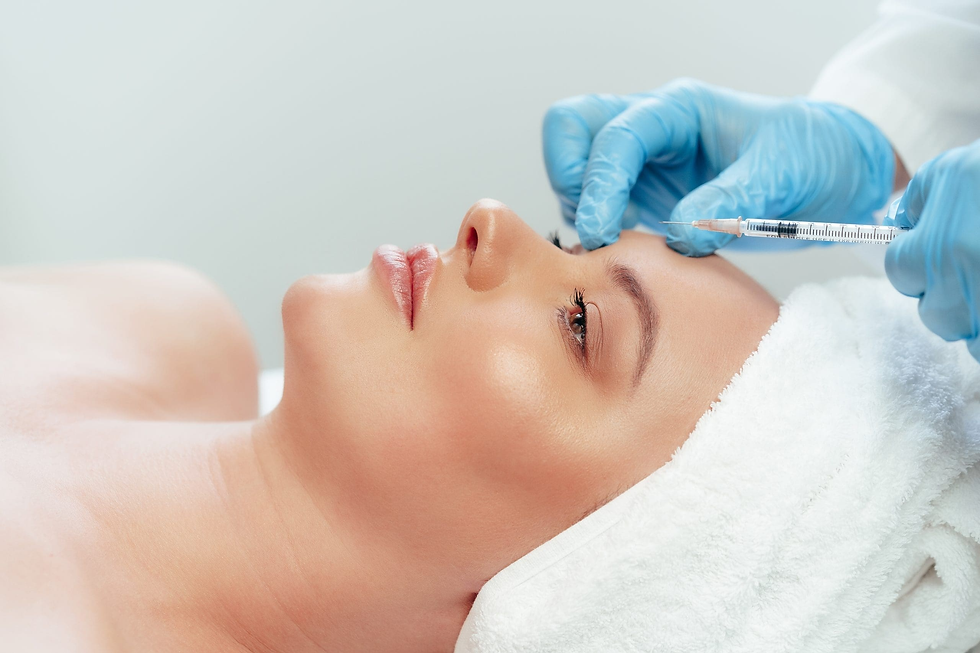
How Treatment Plans Influence Follow-Up Needs
The need for follow-ups depends on several clinical factors rather than a single standard schedule. Different facial areas may respond differently, and individual muscle strength can influence the final appearance.
Important considerations include:
Treatment area: Forehead lines, frown lines, and crow's feet involve different muscle patterns.
Muscle activity: Stronger or more active muscles may respond differently from less active ones.
Treatment goals: Softening expression lines may require a different approach from reducing excessive muscle movement.
Previous experience: Someone receiving Botox for the first time may need additional guidance compared with an established patient.
Individual response: The onset and degree of the effect vary between people.
A personalised plan helps determine whether a review is appropriate and when it should take place.
When Should You Attend a Botox Follow-Up?
Botox results usually begin to become noticeable within a few days, with the full effect commonly developing over approximately 10–14 days. The exact timeline can vary depending on the person and treatment area.
A practitioner may recommend a review after this period to assess the result. Attending too early may make it difficult to judge the final effect because the muscles may still be responding to treatment.
A follow-up may be particularly useful when:
The results appear uneven after the expected onset period.
The treated muscles seem to respond differently from one another.
The outcome does not appear consistent with the agreed treatment goals.
The patient experiences unexpected symptoms or has concerns about recovery.
Any additional treatment should be considered only after a qualified practitioner has assessed the result. Extra injections are not automatically required simply because a patient attends a review.
Does a Follow-Up Always Mean Additional Treatment?
No. A follow-up appointment is primarily an opportunity to evaluate the outcome, discuss concerns, and determine whether further action is appropriate. Many patients may not need any additional injections after their initial treatment.
During a review, the practitioner may assess facial movement, symmetry, the strength of the treatment effect, and whether the result matches the original plan. If the outcome is satisfactory, no adjustment may be needed.
Additional injections should never be assumed to be part of every treatment plan. The decision depends on the clinical assessment, the timing of the review, and the patient's individual circumstances. Treating too soon or adding unnecessary injections may increase the risk of an excessive or unwanted effect.
What Should You Ask Before Booking Botox?
Before proceeding, patients should understand what their treatment plan includes and how follow-up care will be handled. Clear communication can help prevent misunderstandings and support realistic expectations.
Consider asking these questions:
Is a follow-up appointment recommended for my treatment area?
When will the final result be assessed?
What symptoms or changes should I report?
Will additional treatment be considered only if clinically appropriate?
What aftercare instructions should I follow?
Who should I contact if I experience an unexpected reaction?
These questions are useful for first-time patients and those who have received Botox previously. They also help clarify the difference between a routine review and an appointment that is needed to investigate a concern.
Signs That Require Medical Attention
Mild redness, swelling, tenderness, or bruising around injection sites can occur after Botox. These effects are often temporary, but patients should monitor their symptoms and follow the aftercare instructions provided by their practitioner.
Contact a qualified healthcare professional if symptoms are persistent, worsening, or unusual. Seek emergency medical care for difficulty breathing or swallowing, significant difficulty speaking, or generalised muscle weakness. Such symptoms are uncommon but should not wait for a routine follow-up appointment.
A scheduled review is not a substitute for timely medical assessment when concerning symptoms develop.
How to Plan for Long-Term Botox Maintenance
Botox produces temporary effects, so muscle activity gradually returns as the treatment wears off. The duration varies by individual, treatment area, and dose, with effects commonly lasting around three to four months.
Maintenance appointments should be planned according to the patient's response and professional guidance rather than a fixed schedule that applies to everyone. Keeping a record of treatment dates, observed results, and any side effects can help support future discussions.
Patients should also understand that more frequent treatment is not necessarily better. A qualified practitioner can help determine an appropriate interval based on clinical needs, treatment goals, and the product's instructions.
Conclusion
Botox follow-ups are intended to assess treatment response, address concerns, and guide appropriate next steps. Although some patients benefit from a planned review, additional injections are not automatically required. The need for follow-up care depends on individual results, the treatment area, and professional assessment. Understanding the treatment timeline, recognising warning signs, and discussing aftercare in advance can help patients approach Botox with realistic expectations and a stronger focus on safety.


Comments